
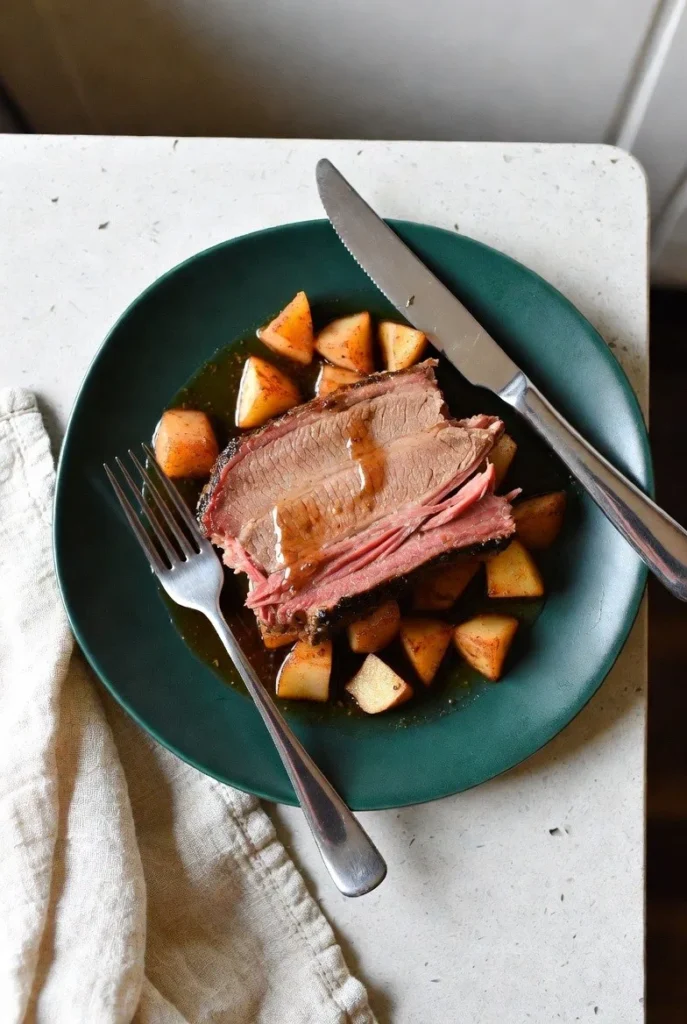
Looking for a mouthwatering dish to serve on St. Patrick’s Day? Consider making a St Patrick’s Day brisket, specifically a braised corned beef brisket that’s sure to impress your friends and family. This recipe combines the richness of corned beef with the warmth of Irish-inspired spices, perfect for the occasion.
Why You’ll Love This Recipe
This St Patrick’s Day brisket recipe stands out due to its unique blend of flavors and the tender, fall-apart texture of the brisket. By using a combination of Guinness stout, brown sugar, and mustard, we create a depth of flavor that complements the natural taste of the corned beef. Additionally, the slow-cooking process ensures that the brisket is incredibly tender and juicy.
Are you ready to dive into the world of Irish cuisine and experience the magic of a perfectly cooked St Patrick’s Day brisket? Let’s get started!
Ingredients
Here is everything you need to make this recipe from scratch.
1 (5-6 pound) corned beef brisket — this cut is essential for the recipe, as it provides the perfect balance of flavor and texture.
1 large onion, sliced — adds a sweet and savory flavor to the dish.
3 cloves of garlic, minced — provides a punch of flavor and aroma.
1 cup Guinness stout — the star of the show, adding a rich and depthful flavor to the brisket.
1/4 cup brown sugar — balances out the bitterness of the Guinness and adds a hint of sweetness.
2 tablespoons Dijon mustard — adds a tangy and creamy element to the dish.
1 teaspoon dried thyme — provides a subtle and earthy flavor.
1/2 teaspoon ground black pepper — enhances the overall flavor and aroma of the dish.
1/2 teaspoon salt — brings out the natural flavors of the ingredients.
4-6 medium-sized potatoes, peeled and cubed — adds a comforting and filling element to the dish.
1 large head of cabbage, sliced — provides a nice crunch and a touch of bitterness to balance out the richness of the brisket.
Why These Ingredients
Corned Beef Brisket
The corned beef brisket is the star of the show in this recipe. It’s essential to choose a high-quality cut of meat, as it will provide the best flavor and texture. Look for a brisket that’s been properly corned and has a good balance of fat and lean meat.
When cooking the brisket, it’s crucial to cook it low and slow to break down the connective tissues and create a tender, fall-apart texture. This is where the magic happens, and the brisket transforms into a mouthwatering, comforting dish.
Guinness Stout
Guinness stout is a game-changer in this recipe. It adds a rich, depthful flavor that complements the natural taste of the corned beef perfectly. The bitterness of the stout is balanced out by the brown sugar, creating a beautiful harmony of flavors.
When cooking with Guinness, it’s essential to use high-quality stout that’s fresh and has a good head. This will ensure that the flavors are vibrant and well-balanced.
Instructions
Let’s walk through every step in detail so your St Patrick’s Day brisket turns out perfectly.
Step 1: Prep the Brisket — Preheat your oven to 300°F (150°C). Rinse the corned beef brisket under cold water, then pat it dry with paper towels. This step is crucial in removing excess salt and creating a clean surface for the flavors to penetrate.
Step 2: Sear the Brisket — Heat a large Dutch oven over medium-high heat. Add a tablespoon of oil and sear the brisket until it’s browned on both sides, about 2-3 minutes per side. This step creates a beautiful crust on the brisket and enhances the overall flavor.
Step 3: Add Aromatics — Add the sliced onion and minced garlic to the pot and cook until the onion is translucent, about 5 minutes. This step adds a sweet and savory flavor to the dish.
Step 4: Add Liquid and Spices — Add the Guinness stout, brown sugar, Dijon mustard, thyme, black pepper, and salt to the pot. Stir to combine, then bring the mixture to a boil.
Step 5: Braise the Brisket — Cover the pot with a lid and transfer it to the preheated oven. Braise the brisket for 3-4 hours, or until it’s tender and falls apart easily. This step is where the magic happens, and the brisket transforms into a mouthwatering, comforting dish.
Step 6: Add Potatoes and Cabbage — After 2 hours of braising, add the cubed potatoes and sliced cabbage to the pot. Continue to braise for another 1-2 hours, or until the potatoes are tender and the cabbage is cooked through.
How To Serve
Serving suggestions are endless, but here are a few ideas to get you started. Slice the brisket against the grain and serve it with the braised potatoes and cabbage. You can also add some crusty bread or over mashed potatoes to soak up the juices.
For a more elegant presentation, slice the brisket into thin strips and serve it with a side of roasted vegetables or a simple green salad. The key is to keep it simple and let the flavors of the brisket shine through.
Another idea is to serve the brisket in a sandwich, topped with melted cheese, caramelized onions, and a dollop of mustard. This is a great way to enjoy the brisket in a more casual setting.
Lastly, consider serving the brisket with a side of colcannon, a traditional Irish dish made with mashed potatoes, kale, and onions. This is a hearty and comforting way to enjoy the brisket, perfect for a cold winter’s night.
How To Keep Leftovers
Room Temperature
It’s not recommended to store the brisket at room temperature for an extended period. However, if you need to store it for a short time, make sure it’s covered and kept away from direct sunlight. The brisket can be stored at room temperature for up to 2 hours.
Refrigerator
The best way to store the brisket is in the refrigerator. Wrap it tightly in plastic wrap or aluminum foil and store it in the fridge for up to 5 days. When reheating, make sure it reaches an internal temperature of 165°F (74°C) to ensure food safety.
Freezer
The brisket can also be frozen for up to 3 months. Wrap it tightly in plastic wrap or aluminum foil and store it in a freezer-safe bag. When reheating, thaw the brisket overnight in the fridge, then reheat it in the oven or on the stovetop until it reaches an internal temperature of 165°F (74°C).
Top Tips
Choose the Right Cut
When selecting a corned beef brisket, look for a cut that’s been properly corned and has a good balance of fat and lean meat. This will ensure that the brisket is tender and flavorful.
Don’t Overcook
It’s essential to cook the brisket low and slow to prevent it from becoming tough and dry. Use a meat thermometer to ensure the internal temperature reaches 160°F (71°C) for medium-rare or 170°F (77°C) for medium.
Let it Rest
After cooking the brisket, let it rest for 10-15 minutes before slicing. This allows the juices to redistribute, making the brisket even more tender and flavorful.
Use High-Quality Guinness
When cooking with Guinness, use high-quality stout that’s fresh and has a good head. This will ensure that the flavors are vibrant and well-balanced.
Experiment with Spices
Don’t be afraid to experiment with different spices and seasonings to create a unique flavor profile. Some ideas include adding a pinch of cayenne pepper or a sprinkle of chopped fresh herbs.
Final Thoughts
A St Patrick’s Day brisket is a hearty and comforting dish that’s perfect for the occasion. By following these simple steps and using high-quality ingredients, you’ll create a mouthwatering braised corned beef brisket that’s sure to impress your friends and family. So go ahead, give it a try, and experience the magic of a perfectly cooked St Patrick’s Day brisket!
St Patrick’s Day Brisket: A Hearty Braised Corned Beef Brisket Recipe
Description
Celebrate St. Patrick's Day with a hearty and comforting braised corned beef brisket recipe. This dish is perfect for a cold winter's night and is sure to become a family favorite.
Ingredients
Instructions
-
Preheat the oven to 300°F (150°C).
-
Rinse the corned beef brisket under cold water, then pat it dry with paper towels.
-
Heat a large Dutch oven over medium-high heat. Add a tablespoon of oil and sear the brisket until it's browned on both sides, about 2-3 minutes per side.
-
Add the sliced onion and minced garlic to the pot and cook until the onion is translucent, about 5 minutes.
-
Add the Guinness stout, brown sugar, Dijon mustard, thyme, black pepper, and salt to the pot. Stir to combine, then bring the mixture to a boil.
-
Cover the pot with a lid and transfer it to the preheated oven. Braise the brisket for 3-4 hours, or until it's tender and falls apart easily.
-
After 2 hours of braising, add the cubed potatoes and sliced cabbage to the pot. Continue to braise for another 1-2 hours, or until the potatoes are tender and the cabbage is cooked through.
Nutrition Facts
Servings 6
- Amount Per Serving
- Calories 500kcal
- % Daily Value *
- Cholesterol 100mg34%
- Sodium 500mg21%
- Potassium 1000mg29%
- Total Carbohydrate 30g10%
- Dietary Fiber 5g20%
- Sugars 10g
- Protein 30g60%
- Vitamin A 10 IU
- Vitamin C 20 mg
- Calcium 50 mg
- Iron 15 mg
- Vitamin E 10 IU
- Vitamin K 20 mcg
- Thiamin 10 mg
- Riboflavin 10 mg
- Niacin 20 mg
- Vitamin B6 10 mg
- Folate 50 mcg
- Vitamin B12 20 mcg
- Biotin 10 mcg
- Pantothenic Acid 10 mg
- Phosphorus 200 mg
- Iodine 10 mcg
- Magnesium 50 mg
- Zinc 10 mg
- Copper 10 mg
- Manganese 10 mg
- Chromium 10 mcg
- Molybdenum 10 mcg
- Chloride 500 mg
* Percent Daily Values are based on a 2,000 calorie diet. Your daily value may be higher or lower depending on your calorie needs.
Note
You can substitute the Guinness with another type of stout or beef broth if you prefer. Also, make sure to use high-quality ingredients, including a fresh and high-quality corned beef brisket.
Frequently Asked Questions
Is this recipe easy to make?
Yes, this recipe is very beginner-friendly and comes together in under 30 minutes.
Can I make it ahead of time?
Absolutely. You can prepare it up to 2 days in advance and store it in the fridge.
What type of potatoes should I use?
You can use any type of potato you like, but Russet or Yukon Gold work best for this recipe.
Can I substitute the Guinness with something else?
While Guinness is a key ingredient in this recipe, you can substitute it with another type of stout or even beef broth if you prefer.
Is this recipe gluten-free?
No, this recipe contains Guinness stout, which contains gluten. However, you can substitute it with a gluten-free stout or beer to make it gluten-free.