
This post may contain affiliate links. Please read my disclosure policy .
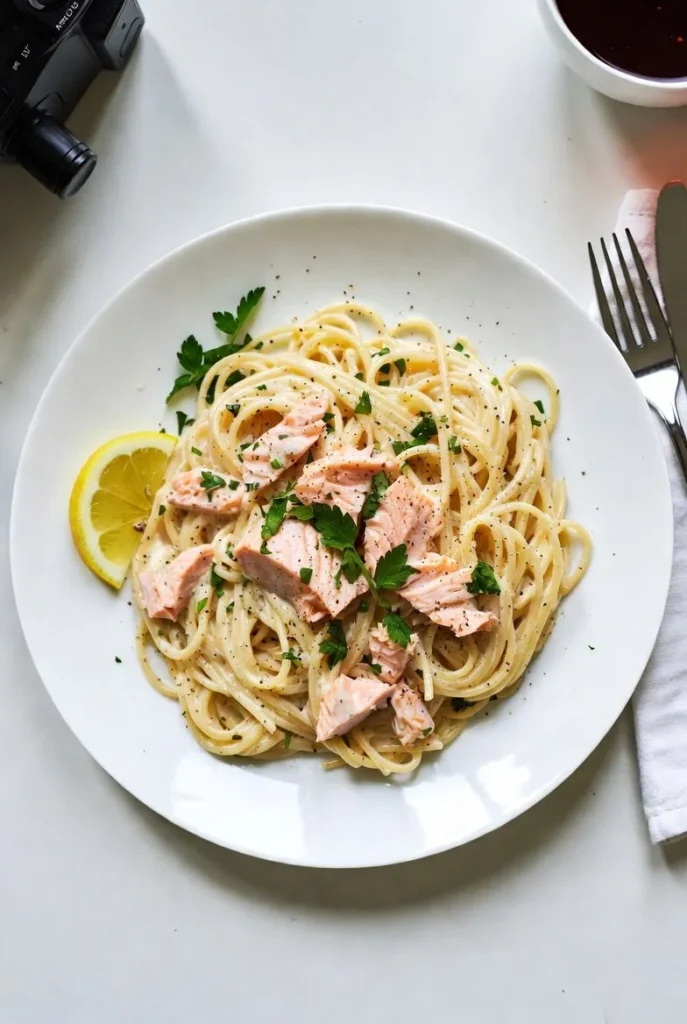
Salmon pasta is a dish that combines the flavors of salmon with the comfort of pasta, making it a great option for a weeknight dinner or a special occasion. In this recipe, we will explore how to make a creamy and flavorful salmon pasta dish that is sure to impress your family and friends.
Why You’ll Love This Recipe
This salmon pasta recipe is a game-changer for anyone who loves seafood and pasta. The combination of succulent salmon, tangy cream sauce, and al dente pasta is a match made in heaven.
Plus, it’s easy to make and can be ready in under 30 minutes, making it a great option for busy weeknights.
The best part about this recipe is that it’s highly customizable. You can use different types of pasta, such as fettuccine or linguine, and add your favorite vegetables or herbs to the cream sauce.
So, feel free to get creative and make this recipe your own!
Ingredients
Here is everything you need to make this recipe from scratch.
12 oz salmon fillet , fresh and of high quality, preferably wild-caught. You can also use canned salmon if you prefer.
8 oz pasta of your choice , such as fettuccine, linguine, or spaghetti. Make sure to choose a pasta that pairs well with the cream sauce.
2 tablespoons olive oil , for sautéing the salmon and garlic. You can also use other oils like avocado or grapeseed.
2 cloves garlic, minced , because everything is better with garlic, right? You can adjust the amount to your taste.
1 cup heavy cream , the base of our cream sauce. You can also use half-and-half or a mixture of milk and cream cheese.
1/2 cup grated Parmesan cheese , the perfect complement to our cream sauce. You can also use other cheeses like cheddar or mozzarella.
1 teaspoon dried basil , for a touch of Italian flair. You can also use fresh basil if you have it on hand.
Salt and pepper, to taste , because you can never have too much of a good thing. Adjust to your taste preferences.
2 tablespoons lemon juice , for a burst of citrus flavor. You can adjust the amount to your taste.
2 tablespoons chopped fresh parsley , for a pop of color and freshness. You can also use other herbs like dill or thyme.
Why These Ingredients
Salmon Fillet
The salmon fillet is the star of this recipe, and for good reason. It’s packed with protein, omega-3 fatty acids, and a delicious flavor that pairs perfectly with the cream sauce.
When choosing a salmon fillet, look for one that is fresh and of high quality, preferably wild caught.
You can also use canned salmon if you prefer, but keep in mind that it may have a slightly different flavor and texture. If you’re using canned salmon, make sure to drain the liquid and rinse it with water before using it in the recipe.
When cooking the salmon, make sure to cook it to the right temperature to ensure food safety. The internal temperature of the salmon should reach 145°F (63°C) to be considered cooked through.
Pasta
The pasta is the foundation of this recipe, and you can use a variety of shapes and sizes to suit your taste. Fettuccine, linguine, and spaghetti are all great options, but feel free to experiment with other types of pasta as well.
When cooking the pasta, make sure to follow the package instructions for the right cooking time. You want the pasta to be al dente, which means it should still have a bit of bite to it.
Overcooking the pasta can make it mushy and unappetizing.
Also, make sure to save some of the pasta water before draining it. The starches in the water can help to thicken the cream sauce and create a richer flavor.
Cream Sauce
The cream sauce is what brings this recipe together, and it’s surprisingly easy to make. The heavy cream provides a rich and creamy base, while the Parmesan cheese adds a salty and nutty flavor.
You can also add other ingredients to the cream sauce, such as diced ham or cooked vegetables, to give it more flavor and texture.
When making the cream sauce, make sure to heat it slowly and whisk constantly to prevent it from curdling. You can also add a bit of flour or cornstarch to thicken the sauce if it becomes too thin.
The cream sauce is also a great way to add some extra flavor to the dish. You can add some dried herbs, such as basil or oregano, to give it an Italian flair.
You can also add some grated garlic or lemon zest to give it a bit of brightness and depth.
Instructions
Let’s walk through every step in detail so your recipe turns out perfectly.
Step 1: Cook the Pasta , Bring a large pot of salted water to a boil and cook the pasta according to the package instructions until it’s al dente. Reserve 1 cup of pasta water before draining the spaghetti.
Step 2: Sear the Salmon , Heat the olive oil in a large skillet over medium-high heat. Add the salmon fillet, skin side up (if it has skin), and sear for 3-4 minutes on each side, or until it’s cooked through.
Transfer the salmon to a plate and set it aside.
Step 3: Make the Cream Sauce , In the same skillet, add the minced garlic and cook for 1 minute, or until fragrant. Pour in the heavy cream and bring the mixture to a simmer.
Let it cook for 2-3 minutes, or until it has reduced slightly and thickened. Remove the skillet from the heat and stir in the Parmesan cheese until it’s melted and smooth.
Step 4: Combine the Pasta and Cream Sauce , Add the cooked pasta to the cream sauce and toss it until the pasta is well coated. If the sauce seems too thick, add a bit of the reserved pasta water to thin it out.
Step 5: Serve and Enjoy , Divide the pasta among individual plates and top each plate with a piece of seared salmon. Drizzle the remaining cream sauce over the top and sprinkle with chopped parsley and lemon juice.
Serve immediately and enjoy!
How To Serve
serve the salmon pasta with a side of garlic bread and a green salad for a well-rounded meal. The crunch of the bread and the freshness of the salad will complement the creamy pasta perfectly.
serve the salmon pasta with a side of roasted vegetables, such as asparagus or Brussels sprouts, for a healthier and more balanced meal. The roasted vegetables will add a nice contrast in texture and flavor to the dish.
serve the salmon pasta with a side of sautéed spinach and cherry tomatoes for a burst of color and flavor. The spinach and cherry tomatoes will add a nice burst of freshness to the dish.
serve the salmon pasta with a side of grilled shrimp or scallops for a seafood lover’s dream come true. The grilled seafood will add a nice smoky flavor to the dish and complement the salmon perfectly.
How To Keep Leftovers
Room Temperature
you can store the salmon pasta at room temperature for up to 2 hours, but it’s best to refrigerate or freeze it as soon as possible to prevent foodborne illness. Make sure to store it in an airtight container and keep it away from direct sunlight.
When storing the salmon pasta at room temperature, make sure to check it frequently for any signs of spoilage. If it starts to smell bad or develops an off texture, it’s best to discard it immediately.
Also, make sure to label the container with the date and time it was stored, so you can keep track of how long it’s been sitting out. This will help you to ensure that you’re consuming the salmon pasta within a safe timeframe.
Refrigerator
you can store the salmon pasta in the refrigerator for up to 3 days. Make sure to store it in an airtight container and keep it at a temperature of 40°F (4°C) or below.
When storing the salmon pasta in the refrigerator, make sure to check it frequently for any signs of spoilage. If it starts to smell bad or develops an off texture, it’s best to discard it immediately.
Also, make sure to label the container with the date and time it was stored, so you can keep track of how long it’s been in the fridge. This will help you to ensure that you’re consuming the salmon pasta within a safe timeframe.
Freezer
you can store the salmon pasta in the freezer for up to 3 months. Make sure to store it in an airtight container or freezer bag and keep it at a temperature of 0°F (-18°C) or below.
When storing the salmon pasta in the freezer, make sure to label the container or bag with the date and time it was stored, so you can keep track of how long it’s been frozen. This will help you to ensure that you’re consuming the salmon pasta within a safe timeframe.
Also, make sure to thaw the salmon pasta slowly in the refrigerator or at room temperature, rather than microwaving it. This will help to prevent the formation of ice crystals and ensure that the pasta stays fresh and flavorful.
Top Tips
Use Fresh Ingredients
Using fresh ingredients, such as fresh salmon and parsley, will make a big difference in the flavor and texture of the dish.
Fresh ingredients will also ensure that the dish is safe to eat and free from any contaminants.
Don’t Overcook the Pasta
Overcooking the pasta can make it mushy and unappetizing, so make sure to cook it al dente.
This will help the pasta to retain its texture and flavor, and ensure that it pairs well with the cream sauce.
Add Some Flavor to the Cream Sauce
Adding some flavor to the cream sauce, such as dried herbs or grated garlic, will give it a richer and more complex flavor.
This will also help to balance out the flavors in the dish and ensure that it’s not too bland or boring.
Use the Right Type of Pasta
Using the right type of pasta, such as fettuccine or linguine, will make a big difference in the texture and flavor of the dish.
The pasta should be able to hold onto the cream sauce and provide a nice contrast in texture to the salmon.
Don’t Be Afraid to Experiment
Don’t be afraid to experiment with different ingredients and flavors to make the dish your own.
This will help you to develop your own unique style and ensure that the dish is tailored to your tastes and preferences.
Final Thoughts
The key to a great salmon pasta dish is to use fresh and high quality ingredients, and to not be afraid to experiment and try new things. With a little practice and patience, you can create a dish that is truly delicious and memorable.
Salmon Pasta: A Delicious and Easy Recipe to Try at Home
Description
This salmon pasta recipe is a game-changer for anyone who loves seafood and pasta. The combination of succulent salmon, tangy cream sauce, and al dente pasta is a match made in heaven. Plus, it's easy to make and can be ready in under 30 minutes, making it a great option for busy weeknights.
Ingredients
Instructions
-
Preheat the oven to 180 degrees and line a baking tray with parchment paper.
-
In a large skillet, heat the olive oil over medium-high heat and sear the salmon fillet for 3-4 minutes on each side, or until it's cooked through.
-
In the same skillet, add the minced garlic and cook for 1 minute, or until fragrant.
-
Pour in the heavy cream and bring the mixture to a simmer. Let it cook for 2-3 minutes, or until it has reduced slightly and thickened.
-
Add the cooked pasta to the cream sauce and toss it until the pasta is well coated. If the sauce seems too thick, add a bit of the reserved pasta water to thin it out.
Nutrition Facts
Servings 4
- Amount Per Serving
- Calories 320kcal
- % Daily Value *
- Cholesterol 60mg20%
- Sodium 400mg17%
- Potassium 400mg12%
- Total Carbohydrate 20g7%
- Dietary Fiber 2g8%
- Sugars 2g
- Protein 30g60%
- Vitamin A 10 IU
- Vitamin C 20 mg
- Calcium 20 mg
- Iron 10 mg
- Vitamin D 10 IU
- Vitamin E 10 IU
- Vitamin K 20 mcg
- Thiamin 10 mg
- Riboflavin 10 mg
- Niacin 20 mg
- Vitamin B6 10 mg
- Folate 20 mcg
- Vitamin B12 10 mcg
- Biotin 10 mcg
- Pantothenic Acid 10 mg
- Phosphorus 20 mg
- Iodine 10 mcg
- Magnesium 10 mg
- Zinc 10 mg
- Selenium 10 mcg
- Copper 10 mg
- Manganese 10 mg
- Chromium 10 mcg
- Molybdenum 10 mcg
- Chloride 10 mg
* Percent Daily Values are based on a 2,000 calorie diet. Your daily value may be higher or lower depending on your calorie needs.
Note
You can customize this recipe to your taste by adding your favorite vegetables or herbs to the cream sauce. You can also use canned salmon instead of fresh salmon, but keep in mind that it may have a slightly different flavor and texture.
Frequently Asked Questions
Is this recipe easy to make?
Yes, this recipe is very beginner-friendly and comes together in under 30 minutes.
Can I make it ahead of time?
Absolutely. You can prepare it up to 2 days in advance and store it in the fridge.
What type of pasta is best for this recipe?
Fettuccine or linguine work well, but feel free to experiment with other types of pasta.
Can I use canned salmon instead of fresh salmon?
Yes, you can use canned salmon, but keep in mind that it may have a slightly different flavor and texture.